Timeline 2017 - 2025
900+
78%
8
40%
CLIENTS SERVED
RETURN RATE
YEARS BUILT
LESS ONBOARDING & ADMIN TIME
In service-based businesses, client retention directly impacts lifetime value and sustainable growth. The challenge was clear: design a content system that would drive measurable retention beyond industry averages.
With 900+ clients and limited resources, I needed to:
- Increase client retention and repeat purchase behavior after initial packages
- Reduce churn through strategic, timely communication
- Create scalable content systems that maintained personalization
- Drive referrals and organic growth through exceptional experiences
The Goal: Transform one-time clients into loyal advocates through content-driven engagement at every touchpoint.
Result: Achieved 78% client return rate, nearly double typical service industry retention, through strategic trigger emails, personalized journeys, and conversion-focused content.
Client Journey Stages
Phase 1: Initial Journey (Stages 1 -3)
1 - Discovery: Finds All Ears through referrals, social content, or Google search.
2 - Initial Contact: Reaches out through a form, DM/email, or phone call.
3 - Consultation: Assesses the dog’s behavior, explains the method, and recommends a custom training plan.

Phase 2: Services & Loyalty Loops (Stages 4 - 6)
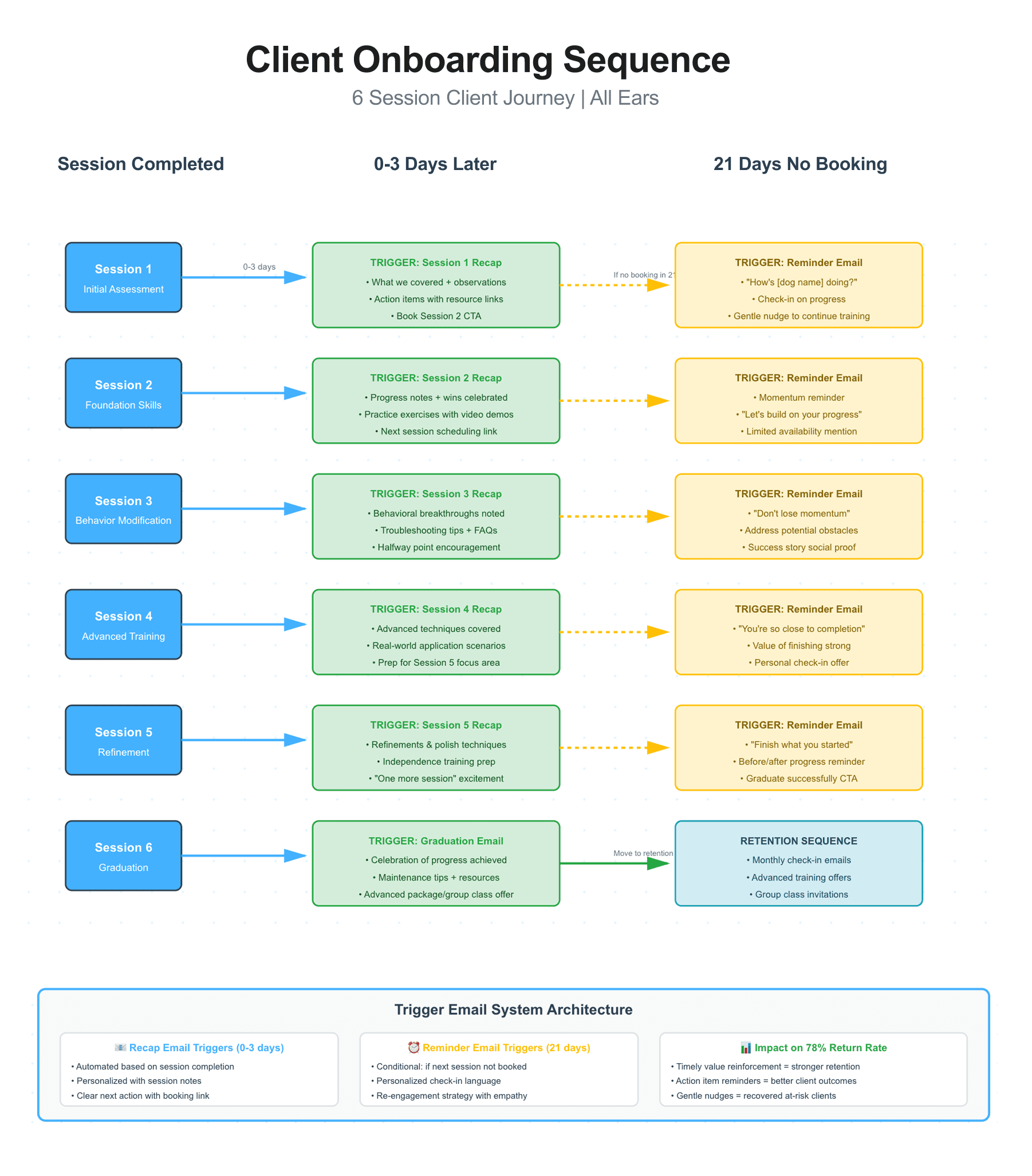
4 - Active Training: Receives progressive training, educational resources, recaps, and reminders.
5 - Sustained Progress: Continues through follow-up sessions, group classes, and re-engagement offers.
6 - Loyal Advocates: Returns for additional services, refers others, shares testimonials, and engages with the brand.
Content & Operations Systems
Built a scalable content and operations system to support 900+ clients without sacrificing consistency or personalization.
Created reusable training resources, including action plans, video demonstrations, and breed-specific education.
Automated scheduling and feedback workflows to reduce repetitive administrative work.
Translated behavioral expertise into clear, actionable content clients could use between sessions.
Result
Reduced onboarding and administrative time by 40%, creating more capacity for high-value client interactions and ongoing content optimization.
Strategic Email Content & Nurture Campaigns
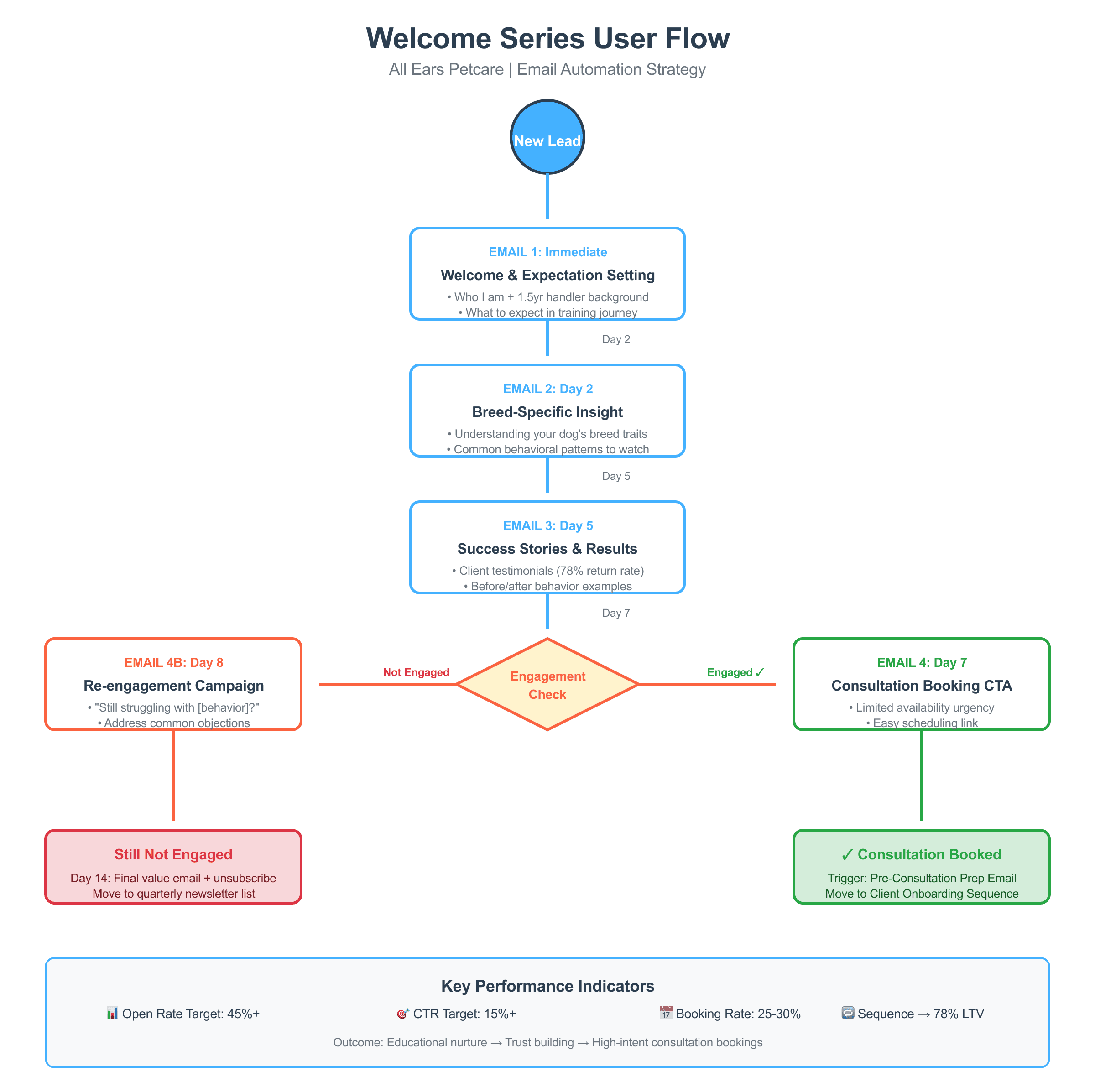
I designed a lifecycle system that connected customer behavior, messaging, and decision points to improve engagement and retention across the journey.
Email Content Strategy:
Lifecycle Design: Structured messaging around key customer stages, from initial onboarding through re-engagement and retention.
Behavior-Based Triggers: Used timing and engagement signals to determine when clients received follow-up, reminder, or re-engagement content.
Segmentation: Tailored messaging based on client needs, behavior, and stage in the customer journey rather than sending one generic sequence.
Conversion Path Design: Connected educational content, trust-building messages, and clear CTAs to move clients toward the next meaningful action.
Content Design Approach:
Voice & Tone: Balanced subject-matter authority with clear, empathetic language to build trust and reduce uncertainty.
CTA Design: Created clear next steps and low-friction booking paths tied to each stage of the customer journey.
Iterative Testing: Used open rates, engagement data, and A/B testing to refine messaging and improve performance over time.
Journey-Based Segmentation: Adapted content based on customer needs, behavior, and lifecycle stage.
Result: Behavior-triggered email sequences became a primary retention driver, contributing to a 78% client return rate, 45%+ recap email open rates, and re-engagement of at-risk clients.
The Impact
78% Client Return Rate
Lifecycle content and behavior-triggered communication helped turn first-time clients into repeat customers.
65% of New Inquiries from Organic Social
Content strategy functioned as a measurable acquisition channel with zero paid advertising spend.
40% Less Onboarding & Admin Time
Reusable content systems and automated workflows reduced repetitive operational work.
900+ Clients Supported
The system scaled across eight years of client service without sacrificing personalization.
Working on a complex customer journey?
I design systems that connect customer behavior, content, workflows, and business goals into clearer, more scalable experiences.
Journey Design
Systems Thinking
Experimentation
More Problems I've Solved

Conversion Focused Social Content
Organic social functioned as a measurable acquisition channel, not a vanity metric. I used audience needs, content performance, and conversion data to guide messaging and move qualified prospects from awareness to booking.
Content Strategy
Audience Targeting: Used breed- and behavior-specific topics to attract high-fit prospects.
Trust & Expertise: Combined educational content, client outcomes, and behind-the-scenes proof to establish credibility.
Conversion Optimization: Tracked which formats and messages generated inquiries, then refined content and CTAs based on performance.
Result: Organic social drove 65% of new client inquiries, with zero paid advertising spend over eight years.
Iterative Content Testing & Optimization
Continuously tested messaging, workflows, and conversion paths to reduce friction and improve customer response across the journey.
Testing & Refinement:
Experimentation: A/B tested subject lines, send times, and CTA placement to improve engagement and booking behavior.
Message Optimization: Refined service descriptions and pricing language based on recurring customer questions and points of confusion.
Flow Analysis: Identified drop-off points in the booking journey and adjusted form copy and messaging to reduce abandonment.
Feedback Loops: Used post-session feedback and behavioral signals to identify content gaps and improve future communication.
Result: Content systematization reduced onboarding and administrative time by 40%, creating more capacity for high-value customer work and ongoing optimization.